Introduction
War has always evolved with technology.
From swords to guns, from tanks to nuclear weapons — every era has been defined by its tools.
But in 2026, a new force is reshaping global conflicts:
Artificial Intelligence.
AI is no longer just powering chatbots or apps — it is now influencing how wars are planned, executed, and even prevented.
This raises an important question:
👉 Is AI making warfare smarter… or more dangerous?
The Rise of AI in Military Technology
Over the past few years, AI has rapidly entered military systems around the world.
From surveillance to decision-making, governments are using AI to:
- Analyze massive amounts of data instantly
- Predict enemy movements
- Automate defense systems
This shift is creating a new type of warfare — one driven by speed, precision, and data.
AI-Powered Drones: The New Battlefield
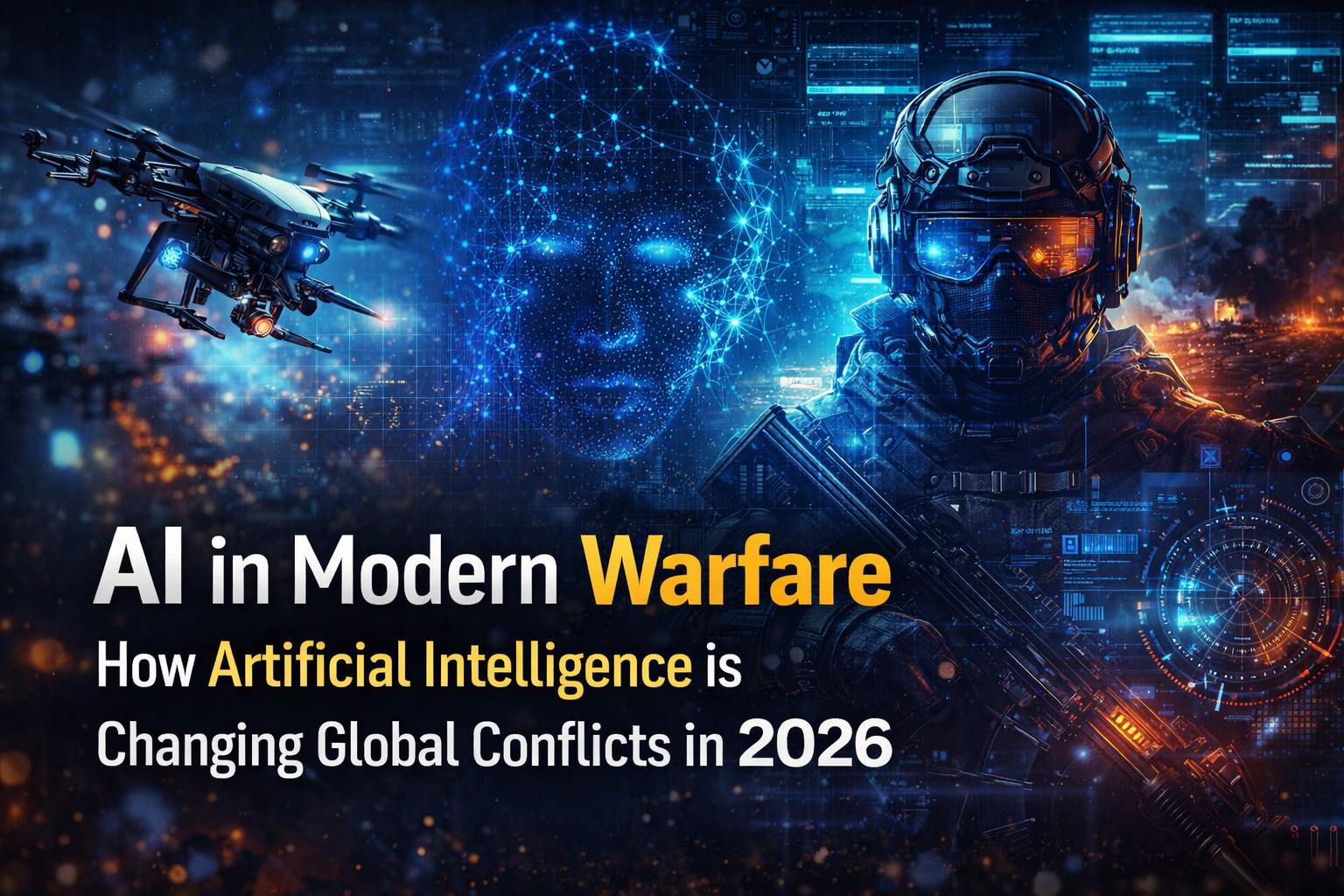
One of the most visible uses of AI in warfare is in drones.
Modern drones are no longer just remotely controlled.
They can now:
- Identify targets using AI vision
- Navigate complex environments
- Make real-time decisions
These systems are faster and more efficient — but also raise serious ethical concerns.
Cyber Warfare and AI
Another major battlefield is not physical — it’s digital.
AI is being used to:
- Detect cyber attacks
- Launch automated cyber defense systems
- Analyze threats in real time
In this new era, wars can be fought without soldiers — through code, algorithms, and networks.
The Ethical Dilemma
As AI becomes more powerful, one question becomes unavoidable:
👉 Should machines be allowed to make life-and-death decisions?
Concerns include:
- Lack of human judgment
- Risk of errors
- Accountability issues
This has sparked global debates about the regulation of AI in military use.
The Role of Human Control
Despite advancements, humans still play a critical role.
AI can:
- Process data faster
- Suggest strategies
But humans:
- Make final decisions
- Provide ethical judgment
- Understand complex situations
The balance between AI and human control will define the future of warfare.
How This Affects the World
AI in warfare doesn’t just affect militaries — it affects everyone.
Potential impacts include:
- Faster conflicts
- More precise attacks
- Increased global tension
At the same time, AI can also:
- Prevent conflicts through prediction
- Improve defense systems
- Reduce human casualties
The Future of AI in Warfare
Looking ahead, AI will likely become even more integrated into global defense systems.
Possible developments:
- Fully autonomous defense systems
- Advanced AI surveillance networks
- Predictive conflict prevention
The world is entering an era where technology and strategy are deeply connected.
What This Means for You
Even if you’re not involved in politics or military matters, this shift matters.
AI is shaping:
- Global stability
- Economic trends
- Technological progress
Understanding these changes helps you stay informed in a rapidly evolving world.
Conclusion
AI is transforming warfare in ways we are only beginning to understand.
It brings:
- Efficiency
- Speed
- Strategic advantage
But also:
- Ethical concerns
- New risks
- Global uncertainty
The future of warfare will not just be about weapons —
it will be about intelligence, algorithms, and control.