
Introduction
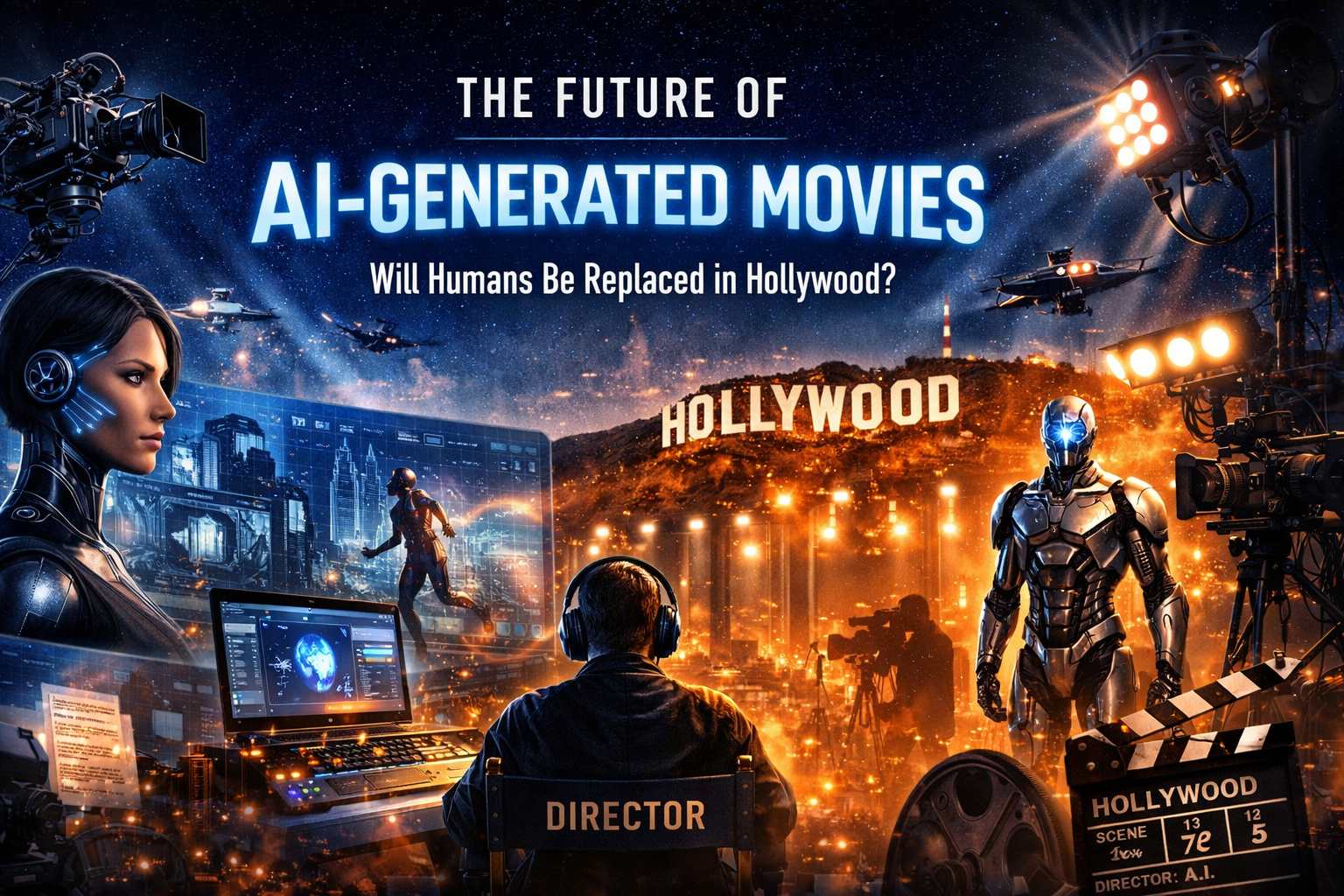
Hollywood has always been the land of imagination, drama, and incredible storytelling. But in 2026, a new kind of director is emerging — artificial intelligence. From AI-generated scripts to hyper-realistic virtual actors, AI is beginning to redefine every stage of filmmaking.
The question everyone is asking:
Are humans being replaced in Hollywood by AI? Or is this the start of an unprecedented collaboration between creativity and technology?
This article explores the rise of AI in the movie industry, its potential, ethical concerns, and what it means for filmmakers, actors, and audiences alike.
How AI is Revolutionizing Filmmaking
Artificial intelligence is no longer a concept limited to tech labs. In Hollywood, it is already revolutionizing scriptwriting, visual effects, acting, and even post-production. Here’s how:
1. AI Scriptwriting
AI tools like ChatGPT, Sudowrite, and Jasper AI can now generate full-length movie scripts in hours — a process that used to take months.
Benefits for writers:
- Faster idea generation
- Plot and dialogue suggestions
- Predicting audience preferences through AI analytics
Some AI tools can even analyze hundreds of blockbuster scripts to identify patterns that make stories more likely to succeed at the box office.
Real-World Example:
Shortly after 2025, an indie studio released a short AI-scripted film that gained millions of views online, demonstrating that AI can indeed create compelling narratives.
2. AI-Generated Visuals and CGI
Gone are the days when creating realistic visual effects meant huge budgets and long production timelines. AI-generated visuals now allow filmmakers to:
- Create immersive backgrounds without building expensive sets
- Generate realistic CGI characters and props
- Reduce post-production time drastically
Why it’s exciting:
Independent creators can now produce blockbuster-quality visuals without million-dollar budgets, leveling the playing field between indie filmmakers and Hollywood giants.
3. AI Actors and Deepfake Technology
One of the most controversial developments is AI-generated actors. Deepfake and AI-generated faces allow filmmakers to:
- Recreate performances of historical actors
- Generate lifelike digital characters
- Produce entirely virtual actors for scenes
While this is fascinating for creative possibilities, it also raises ethical questions: Should AI replace human actors entirely? What about royalties and intellectual property rights?
4. Personalized Films
Imagine a future where movies adapt to individual viewer preferences. AI can:
- Tailor storylines for each user
- Change character choices or endings
- Offer a fully immersive, interactive experience
This could make cinema a personal experience, something like a “Netflix choose-your-own-adventure” on steroids.
The Ethical Debate: Human Creativity vs AI
AI-generated movies are exciting, but they also spark serious debates:
Human Jobs at Risk
AI could reduce demand for:
- Screenwriters
- Visual effects artists
- Minor acting roles
However, it simultaneously creates new job opportunities:
- AI supervisors
- Data-driven directors
- AI content editors
Can AI Replace Emotion?
One of the biggest questions:
Can AI truly replicate human emotion, intuition, and creativity?
While AI can mimic dialogue and visuals, human storytelling involves nuance, empathy, and lived experience — things AI cannot fully reproduce… yet.
How Filmmakers Can Use AI
AI is not meant to replace humans completely; the smartest creators use AI as a collaboration tool.
Examples:
- Writers can brainstorm plots faster
- Directors can pre-visualize scenes using AI-generated storyboards
- Editors can automate tedious post-production tasks
The result? Faster workflows, lower costs, and more room for creativity.
What This Means for Audiences
For movie lovers, AI-generated films could mean:
- More content: With AI, studios can produce movies faster
- Interactive experiences: Personalized stories that adapt in real-time
- Diverse storytelling: AI can generate content for niche audiences that might never get funding otherwise
However, viewers may notice a shift in emotional depth, and some may prefer human-driven storytelling.
Case Studies and Real Examples
- AI Short Film Released in 2025
- Written entirely by AI
- Generated using AI visuals and voice synthesis
- Received millions of online views
- Virtual Actors in Indie Films
- Indie filmmakers are experimenting with AI faces and deepfake performances
- Cuts production costs by 40–60%
These early examples indicate that AI is already making a measurable impact in entertainment.
The Future: Collaboration, Not Replacement
The most likely scenario is collaboration between humans and AI, not outright replacement:
- Humans provide emotional intelligence, creativity, and cultural insight
- AI handles repetitive tasks, visualization, and rapid ideation
This combination could lead to a golden age of filmmaking, where stories are richer, visuals are more immersive, and movies are more accessible to creators of all budgets.
Key Takeaways
- AI is transforming scriptwriting, CGI, acting, and editing
- Ethical concerns and copyright issues are real
- Human creativity remains irreplaceable
- Early adopters will have the competitive edge in filmmaking
- Audiences will enjoy more immersive, personalized, and diverse stories
Conclusion
AI-generated movies are no longer science fiction — they’re here, and they’re changing Hollywood as we know it.
While AI cannot yet replicate human emotion completely, its ability to accelerate creativity and lower production costs is undeniable.
The future of filmmaking likely involves humans and AI working together to create content that is faster, cheaper, and more immersive than ever before.
For filmmakers, enthusiasts, and audiences, the message is clear: embrace AI, stay creative, and prepare for a cinematic revolution.
2 thoughts on “The Future of AI-Generated Movies: Will Humans Be Replaced in Hollywood?”