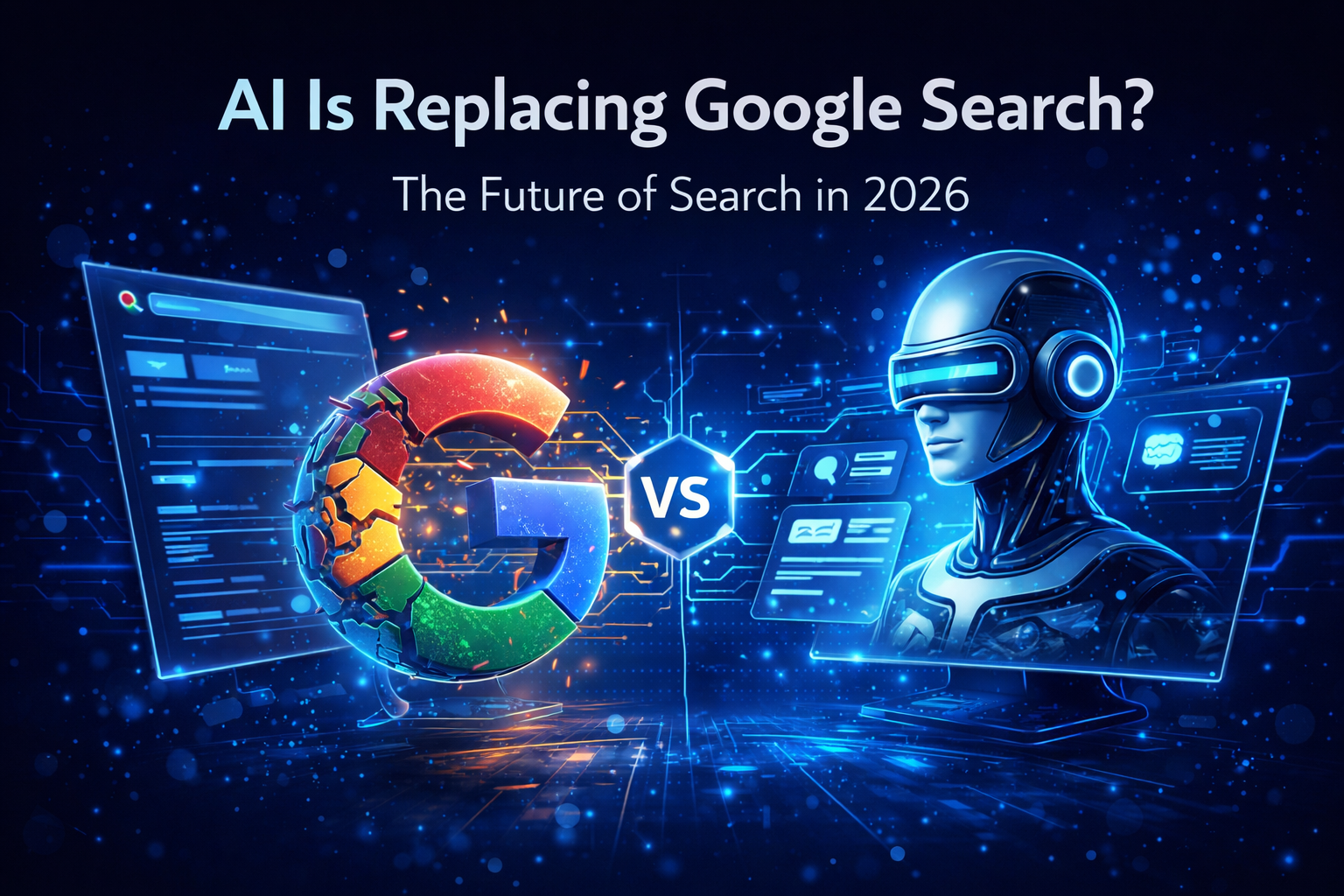
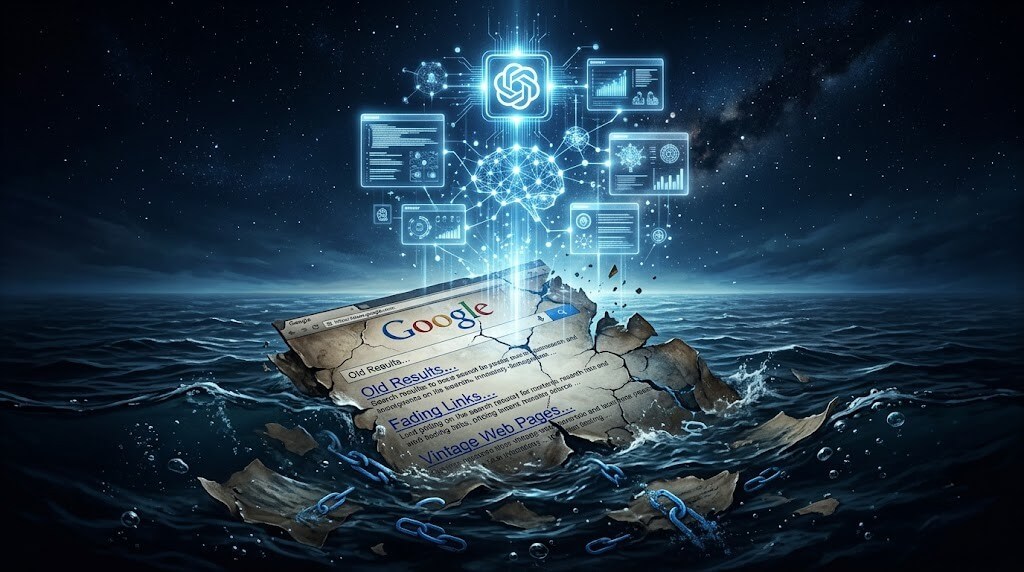
Quick Answer: No — SEO is not dead in 2026. But the version of SEO that worked in 2020 is completely finished. Google still drives 89% of all web traffic and processes 16.4 billion searches every day. What has died is keyword-stuffing, thin content, and chasing rankings without strategy. What is alive — and growing fast — is a new discipline called GEO (Generative Engine Optimization) that works alongside traditional SEO to get your content cited by AI engines. This guide tells you exactly what changed, what the data proves, and the precise steps to survive and win.
Is SEO dead in 2026? This question is being typed into Google — and ironically into ChatGPT — by millions of bloggers, business owners, and marketers who just watched their organic traffic collapse. The fear is real. The data behind it is real. And anyone telling you “SEO is fine, just keep doing what you were doing” is lying to you.
But anyone telling you “SEO is finished, give up” is also wrong.
The truth sits in the middle — and it is more specific, more actionable, and more urgent than either extreme. This guide gives you the honest, data-driven answer that most blogs on this topic are too vague or too afraid to give you. By the end, you will know exactly what died, exactly what survived, and exactly what to build right now to keep getting traffic in a world where AI is eating search one query at a time.
What Actually Happened to Search in 2026: The Numbers That Explain Everything
To answer whether SEO is dead, you first need to understand what happened to Google search this year — because the scale of the shift is extraordinary.
On July 10, 2026, Google completed the most sweeping transformation of its flagship product in the company’s history. Gemini 3.5 Flash now powers every query — not just queries where users chose the conversational tab. AI Mode, powered by Gemini 3.5 Flash, surpassed one billion monthly users with query volume more than doubling every quarter since launch.
Google AI Overviews now appear on 48% of all search queries — a 58% increase year over year. Organic click-through rates drop 34 to 61% when an AI Overview appears.
93% of AI Mode sessions end without the user clicking on any external website. Google AI Mode crossed 100 million monthly active users in early 2026 — a fourfold increase since its May 2025 launch. The average AI Mode query is 7.22 words long — roughly three times longer than a traditional Google search.
The industry-level data is severe. SEO firm Growtika tracked data from early 2024 to January 2026 and found that at their peak, ten major technology outlets combined received 112 million monthly visits from US Google users. By January 2026, that number had fallen to just under 50 million — a drop of more than 55% in under two years. Digital Trends went from 8.5 million clicks per month to 264,861 — a 97% collapse.
Those numbers are real. The traffic collapse is real. Anyone running an informational blog in the tech, health, or general content space has felt it. So yes — something has died. The question is what, exactly.
What Has Died: SEO Tactics That Are Finished in 2026
Let us be completely direct about what is gone and will not come back.
Thin informational content is finished. Cheap content, keyword-stuffed pages, link-buying schemes, and “100 articles a month for $500” packages are dying. Traditional SEO tactics — keyword stuffing, exact-match domains, mass link building, and thin content — are genuinely dead. Google has spent over a decade trying to kill these practices. AI Overviews have finished the job.
“How to do X” informational queries are mostly gone. “How to do X” queries are cannibalized by AI Overviews at 99.9%. If your entire content strategy was built on answering basic how-to questions, that traffic source is effectively over.
Ranking for one keyword on one page is obsolete. The version of SEO built purely around keyword volume and ranking single URLs for single queries is what is dying. Modern SEO now includes AI Overview visibility, Generative Engine Optimization, and social search — all working together.
Zero-click is the new normal. 68% of Google searches in the United States between January and April 2026 ended with zero clicks to any external website. Position 1 CTR drops by 58% when AI Overviews are active. The assumption that ranking number one equals traffic is permanently broken for informational queries.
If your blog depended on any of these — and most content sites did — the pain you are feeling is real, it is structural, and it will not reverse.
What Has NOT Died: SEO That Is Still Working and Growing
Here is where most “is SEO dead” articles fail you — they describe what broke without telling you what still works. Here is the precise breakdown of what is performing well right now.
Commercial and Transactional Queries Are Thriving
Commercial and transactional intent queries — “best WordPress hosting India” or “hire WordPress developer” — Google does not answer these with an AI summary. Businesses that rank here see real, high-converting traffic. Long-tail, high-specificity queries and local searches with geographic intent are almost entirely unaffected by AI Overviews.
“Buy X,” “best X for Y,” and “price of X” queries have only a 3–4% AI Overview rate in e-commerce. These are the queries where people are ready to make a decision — and Google still sends them to websites because AI cannot complete the transaction for them.
Being Cited in AI Answers Is the New Ranking
If 93% do not click but Google cites its sources, the new goal is being cited in the AI Overview. Brands cited in an AI Overview see a 35% higher click-through rate compared to those not cited. Structured schema markup, original data, citations from authoritative sources, and direct, concise answers to common questions are the tools to get there.
This is the single most important shift in SEO thinking for 2026. You are no longer optimizing to rank. You are optimizing to be quoted. The page that gets cited as the source inside an AI answer gets the traffic, the brand impression, and the authority — whether the user clicks through or not.
Google Still Dominates Web Traffic by a Massive Margin
Google still controls 89% of US web traffic. Despite the growth of AI platforms, Google remains the single largest source of website visits by an enormous margin. No AI chatbot is anywhere close to matching Google’s referral volume.
Google processes over 8.5 billion searches per day in 2026. Organic search drives 53% of all website traffic according to BrightEdge’s latest research.
The traffic volume is still there. The total number of searches is still growing. What changed is the percentage of those searches that result in a click to your site. Fewer clicks per search — but more searches total.
Brand Search Is Stronger Than Ever
Brand signals like search volume, authority, and trust matter for AI visibility. Google favors entities, not just pages. Build real-world credibility if you want to rank.
The sites that are not collapsing in 2026 share a common feature: people search for them by name. When users type “AI Pilot Guide” rather than “best AI tools blog,” Google treats that as a trust signal that protects organic rankings even as AI eats informational queries. Building a brand — not just publishing content — is now the most durable SEO strategy available.
The New Discipline: GEO (Generative Engine Optimization) Explained
GEO is the most important concept in digital marketing in 2026, and almost nobody outside specialist SEO communities understands it yet. This section explains it completely.
GEO is the practice of optimizing your brand’s content and digital presence to appear in AI-generated responses across Agentic AI platforms like ChatGPT, Google AI Overviews, Perplexity AI, Claude, and Microsoft Copilot. Unlike traditional SEO which optimizes for keyword rankings, GEO focuses on structured data implementation, entity authority, E-E-A-T signals, and content formatting that AI systems can extract and cite.
Think of it this way. Traditional SEO put your page in front of a human searcher. GEO puts your content inside the AI answer that the human searcher reads. Both get you in front of the user — but through fundamentally different mechanisms.
AI Mode and AI Overviews cite different URLs approximately 86% of the time. This means you cannot simply do SEO and hope for the best. You need a dual-pronged approach that optimizes for the AI summary above the search results and the conversational citations within AI Mode.
AI answers are not pulled from thin air. ChatGPT, Gemini, Perplexity, and Google AI Overviews read from web content they can find, trust, and quote. SEO is the discipline that makes your pages findable and trustworthy. So the same work that once earned rankings now earns citations inside AI answers. The goal shifted from position to presence — you want to be the source the machine quotes, not one link out of ten.
The 7 SEO and GEO Strategies That Are Working Right Now in 2026
This is the action section. Every point here is backed by current data from practitioners who are seeing results, not predictions from people who stopped testing.
Strategy 1: Optimize for AI Citations, Not Just Rankings
Structure your content so AI engines can extract clear, quotable answers. This means: lead every section with a direct one or two sentence answer, use clear H2 and H3 headings that state the answer, include specific numbers and statistics with sources, and add FAQ sections with question-format headings. Structured schema markup, original data, citations from authoritative sources, and direct, concise answers are the technical tools for getting cited in AI Overviews.
Strategy 2: Shift to Comparison and Commercial Content
Move your content focus from “how to do X” to “X vs Y,” “best X for Y,” and “X review.” If your business is B2B, shift your content focus from generic guides to product comparisons, demos, and case studies with real numbers. These are harder for an AI to summarize and closer to conversion. Comparison content and product-intent content has dramatically lower AI Overview rates because the user wants to make a decision — not just get information.
Strategy 3: Build Topical Authority in One Niche
If your content is original, useful, and clearly structured, AI Mode gives it more chances to surface at the right moment. Rand Fishkin’s analysis of 400 websites that did not collapse during the great traffic apocalypse of 2024–2026 found they shared five features: a unique product or service, ability to enable task completion, proprietary assets, tight topical focus, and a strong brand. Covering one topic deeply — as AIPilotGuide does with AI — builds the entity authority that protects rankings across all content types.
Strategy 4: Produce Original Research and Proprietary Data
Original investigations, contextual analysis, and direct audience relationships are where the industry is moving. Most publishers plan to reduce investment in traditional Google SEO in 2026 and invest in these instead. First-party surveys, original experiments, proprietary data, and genuine expert opinions that cannot be scraped from other websites are the content type most likely to be cited by AI engines — because they are the only content AI cannot synthesize from existing sources.
Strategy 5: Optimize for Multiple AI Platforms, Not Just Google
Search is no longer just on Google. Users discover content through social media, marketplaces, and AI engines — your optimization strategy needs to reach beyond traditional search. In 2026, you need to be findable on ChatGPT, Perplexity, Google AI Overviews, Claude, and Gemini — not just Google’s blue links. The fundamentals are the same: authoritative, well-structured, citable content. But tracking where your citations appear now requires monitoring across multiple platforms.
Strategy 6: Invest in Technical SEO More Than Ever
Structured data has always helped with rich results. In 2026, it also helps AI systems parse and understand your content. The discipline now spans AI search citations, AEO, AI Overview defense, topical authority, and entity signals. Page speed, Core Web Vitals, schema markup, clear HTML structure, and mobile optimization are now prerequisites for AI visibility — not just Google ranking factors. A technically broken site that AI cannot easily read and parse will not be cited regardless of content quality.
Strategy 7: Build a Brand, Not Just a Website
Customers are still searching — they are just searching differently, and they are buying from brands they recognize and trust. Cheap content, keyword-stuffed pages, and link-buying schemes are dying — and honestly, good riddance. The sites surviving and growing in 2026 are the ones where users know the name, search for it directly, share it on social media, and return without needing Google to find them again. Brand building — through consistent publishing, audience engagement, social presence, and genuine expertise — is the highest-ROI SEO investment available right now.
The Hard Truth for Bloggers: What the Traffic Data Means for AdSense Income
This is the section most SEO blogs refuse to write honestly. Here it is.
If your blog earns money through Google AdSense and was built primarily on informational content — the type of content that AI Overviews now answer directly — your traffic has dropped, your ad impressions have dropped, and your AdSense revenue has dropped with it. This is not your fault. It is a structural market change.
For publishers monetized through display advertising, which remains the primary income source for the majority of independent bloggers, higher per-visit quality does not compensate for collapsing volume. A blogger whose site receives 50% fewer visits but with better engagement per visit still has 50% fewer ad impressions.
The path forward for AdSense-monetized blogs in 2026 requires a content pivot:
Move toward comparison content. “ChatGPT vs Gemini 2026,” “best AI tools for writers vs marketers,” “Notion vs Obsidian” — comparison queries have low AI Overview rates, high commercial intent, and users who stay on pages longer. Longer time-on-page improves AdSense RPM significantly.
Cover breaking news and new launches. News, research, and fresh content are areas where AI cannot reliably answer questions — Google still sends users to original sources for these. Being first to cover a new AI tool launch, a major update, or a breaking story in your niche is one of the most reliable traffic strategies remaining.
Build an email list in parallel. The bloggers who are weathering the 2026 traffic collapse with the least damage are the ones who spent the last two years building direct audience relationships through email. Email traffic is immune to algorithm changes, AI Overview cannibalization, and Google policy shifts. Every blog post should have an email capture — and growing that list should be treated as the primary objective, with search traffic as the secondary benefit.
Target underserved geographic markets. AI Overviews are English-language dominant in their content quality. Content in Urdu, Hindi, Arabic, and other regional languages faces far less AI competition and reaches audiences where AdSense CPC is rising rapidly. For Pakistani bloggers, creating English content targeting the South Asian diaspora audience in the UK, US, and Canada — who search in English but relate to South Asian context — combines high AdSense CPC markets with lower competition content gaps.
Country-by-Country: How the SEO Collapse Is Playing Out Globally
The impact of AI search is not uniform. Understanding where you sit in the global picture changes your strategy significantly.
United States: The most severe impact. 60% of Google searches now end without a click to any website. The zero-click trend predates AI Overviews but accelerated sharply with them. English-language informational content faces the most competition from AI Overviews. Commercial, local, and transactional content is holding. AdSense RPM remains the highest globally, making the US market still worth targeting with the right content types.
United Kingdom and Europe: A documented B2B case study from Italy shows 18% more impressions and 23% fewer clicks over one year — representing the European pattern of rising visibility but falling traffic. GDPR compliance requirements add complexity to Google’s data collection in Europe, which has modestly slowed AI Overview expansion here compared to the US.
India and Pakistan: Google AI Mode and full AI Overviews are deploying more slowly in South Asian markets due to regional content quality and language complexity. This means the window for traditional SEO to work remains open longer in these markets than in English-dominant Western markets. Pakistani and Indian bloggers writing English content about AI, technology, and digital topics have a genuine advantage right now — more search clicks are still reaching websites, and competition from AI summaries is lower than in the US. This window will close, but it provides a 12–18 month runway to build brand authority and email audiences before the full AI transition arrives.
Global emerging markets: AI Overviews are English-first and have minimal coverage of content in local languages across Africa, Southeast Asia, and Latin America. For multilingual bloggers, this represents a genuine content moat that will persist for several years.
The Survival Checklist: Is Your Blog Built for 2026?
Answer these questions honestly. Each “no” is an action item.
Does your content include original data, statistics, or research that cannot be found anywhere else? Content with proprietary insights is far more likely to be cited by AI engines than content that synthesizes existing information.
Does every major section of your blog start with a direct, quotable answer in one or two sentences? AI engines extract direct answers. Content buried in paragraphs of context rarely gets cited.
Do you have FAQ sections with question-format H2 headings on your key posts? FAQ schema triggers rich snippets in traditional search and makes content far more extractable for AI citation.
Is your site technically clean — fast-loading, mobile-optimized, with proper schema markup? Technical barriers that prevent AI crawlers from reading your content efficiently are invisible SEO killers in 2026.
Are you tracking citations in AI Overviews, ChatGPT, and Perplexity separately from traditional rank tracking? If you are only measuring Google positions, you are missing the most important visibility metric of 2026.
Do you have a content cluster strategy where multiple posts reinforce a central topic? Topical authority — not individual page rankings — is what protects visibility in the AI search era.
Are you building an email list or social following that is independent of Google traffic? Platform diversification is no longer optional. It is the risk management strategy for every blogger and content creator in 2026.
Frequently Asked Questions
Is SEO dead in 2026? No. SEO is not dead — but the version of SEO built on keyword stuffing, thin content, and chasing informational rankings is finished. Google still drives 89% of web traffic and processes 16.4 billion searches daily. What changed is that AI Overviews now answer many queries directly, reducing click-through rates. The new discipline — GEO (Generative Engine Optimization) — focuses on getting cited inside AI answers, not just ranking for keywords.
What is GEO and how is it different from SEO? GEO stands for Generative Engine Optimization. Traditional SEO optimizes your content to rank as a blue link in search results. GEO optimizes your content to be cited as a source inside AI-generated answers from Google AI Overviews, ChatGPT, Perplexity, Gemini, and Claude. In 2026, the most effective strategy combines both — ranking and being cited.
Which types of content still rank and get clicks in 2026? Commercial and transactional content (best X for Y, X vs Y comparisons, product reviews), local intent searches, breaking news and new product launches, highly specific long-tail queries, and brand name searches all continue to drive meaningful traffic. Broad informational queries (“how to do X”) have been largely absorbed by AI Overviews.
How much has Google traffic dropped in 2026? Major tech publishers lost 55–97% of their Google-referred traffic between early 2024 and January 2026. The average site saw position 1 CTR drop 58% when AI Overviews appeared. 68% of US searches ended without a click in the first half of 2026.
Can bloggers still make money from AdSense in 2026? Yes — but the strategy must shift. Comparison content, commercial-intent content, breaking news, and content targeting markets where AI Overview coverage is lower (South Asia, non-English markets) are the best paths for AdSense monetization in 2026. Building an email list in parallel is now essential insurance against future traffic changes.
What does GEO optimization actually involve? GEO optimization includes: leading every section with a direct quotable answer, using question-format headings, adding FAQ schema markup, including specific statistics from authoritative sources, building topical authority through content clusters, improving technical SEO so AI crawlers can read your content easily, and consistently publishing original research that cannot be sourced elsewhere.
Is it still worth starting a new blog in 2026? Yes — with the right strategy. New blogs should focus on tight niche topical authority rather than broad informational content, target comparison and commercial-intent keywords, build for GEO citation from day one, and treat email list growth as the primary metric. Blogs launched with this approach are competing on a more level playing field in 2026 than broad content sites that grew under the old rules.
The rules of search changed in 2026 — but the opportunity did not disappear. It moved. AI Pilot Guide tracks every shift in the AI and search landscape so you always know where the opportunity is next. Explore the full library and stay ahead of the curve.